MRi Compatible Multi Coax cable-MRI Cable for MRi RF Coil
High-Performance MRI Compatible Multi Coax Cable
Conectmed specializes in manufacturing MRI cables for MRI RF coils with advanced non-magnetic properties. Our ultra-flexible, low-attenuation MRI compatible multi coax cables are engineered to optimize the signal-to-noise ratio (SNR) for medical imaging equipment.
Quality System: Manufactured under ISO 13485 medical quality standards.
Standard Specifications: Fully compliant with RG178 and custom 32AWG 50-ohm RF cable requirements.
Key Feature: 100% Non-magnetic copper alloys (Non-ferrous) to ensure clear imaging.
Request a Custom Layout & Free Samples
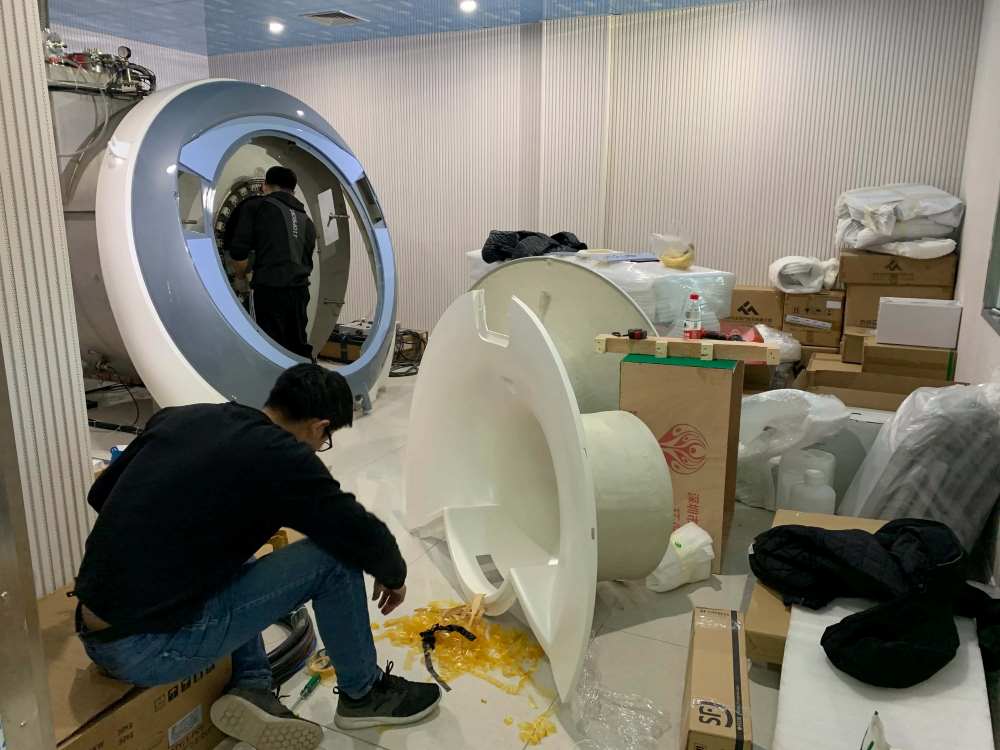
The function of an MRI RF system is very similar to that of a radio wave antenna. It emits radio waves, specifically RF pulses, into the human body, causing the hydrogen protons in the body tissues to undergo NMR (nuclear magnetic resonance). The MRI signals are also a form of radio waves, which can be received by RF coils, which composes of MRi Compatible Multi Coax cable
Our multi coax cables are designed to fit perfectly into various types of RF coils in MRI, including whole volume coils, partial volume coils, and phased array coils (8-channel, 16-channel, and 32-channel systems).”
Components of An MRI RF System:
Alike to a general RF System, MRI RF system also consists of the
RF transmission system;
RF coils;
RF Receiver.
How does an MRI RF System work:
- The main NMR unit generates digital pulse waveforms based on the selected pulse sequence.
- The digital pulse waveforms are converted into analog signals through a digital-to-analog converter.
- The analog signals are modulated and amplified to drive the transmitting coil, which excites the resonance of H nuclei in the imaging area, generating nuclear magnetic resonance signals.
- The weak nuclear magnetic resonance signals are amplified by a preamplifier, and then processed through demodulation, filtering, analog-to-digital conversion, preprocessing, Fourier transformation, etc., to finally reconstruct the MRI image.
Why Does an MRI Equipment Require Multiple Surface Coils?
The most important reason is that the signal-to-noise ratio of the image is directly affected by the reception coils. The closer the receiving coil is to the area being examined, the stronger the received signal. Moreover, smaller coils receive lower levels of noise.
types of rf coils in mri
Based on their functions:
transmission coils:only transmit RF signal
Coils that both excite resonance in the human body and receive the MRI signal.
For example, body coils installed inside the MRI machine serve the dual purpose of transmitting RF pulses and receiving signals.
Coils that only receive the MRI signal(i.e MRI receiver coil).
Most of the coils used in clinical settings for various body parts belong to this category. Surface coils, including phased-array coils, are examples of such receiver-only coils.
Based on their coverage area
They can also be classified into five categories based on their coverage area:
whole volume coils (body coils);
partial volume coils (Knee Coil);
surface coils (spinal surface coils,);
intracavity coils (rectal coils);
phased array coils.
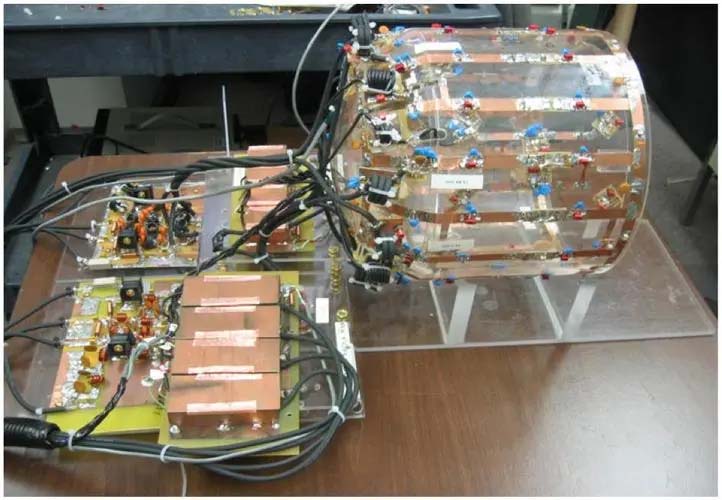
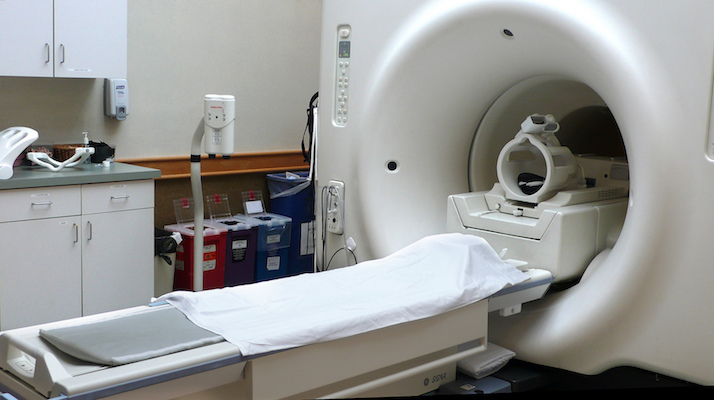
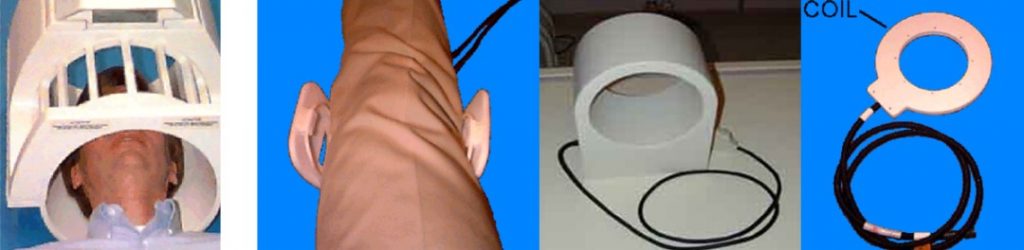
Transmission coils are generally installed inside the main magnet and are not visible in normal circumstances. On the other hand, reception coils are usually surface coils, such as Siemens’ “large flexible” and “small flexible” coils, as well as GE surface coils. There are also some coils that can both transmit RF pulses and receive signals, including head quadrature coils and body coils.
Head quadrature coils and body coils
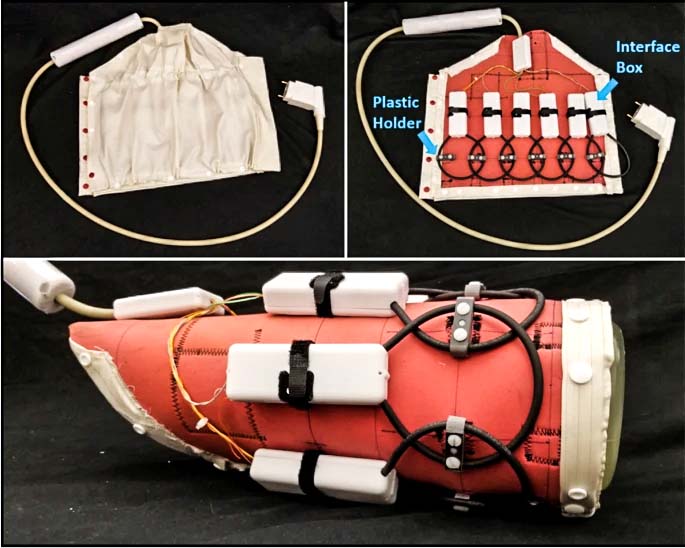
With the advancement of technology, phased-array coils have been invented to further improve the acquisition speed and SNR (signal to noise ratio) of images. Phased-array coils are composed of multiple sub-coils and are used in conjunction with multiple data acquisition channels. Common examples include 8-channel phased-array coils, 16-channel phased-array coils, 32-channel phased-array coils, and so on. The application of phased-array coils and parallel acquisition techniques has improved the acquisition speed and signal-to-noise ratio of MRI signals, thereby shortening the acquisition time.
Each coil can be used individually or in combination. For example, Siemens’ Total Imaging Matrix (Tim) technology allows for the free combination of multiple independent coils to achieve panoramic imaging with a large field of view. Combining head quadrature coils, body coils (2), and spinal coils can enable imaging for a wide range of body scans.
RF coaxial cable choosing in mri rf coil design
Being different from the other application RF coaxial cable, MRI cable for MRi RF Coil are usually two types:
- Pure Multi coax cable without DC wire (signal wire)
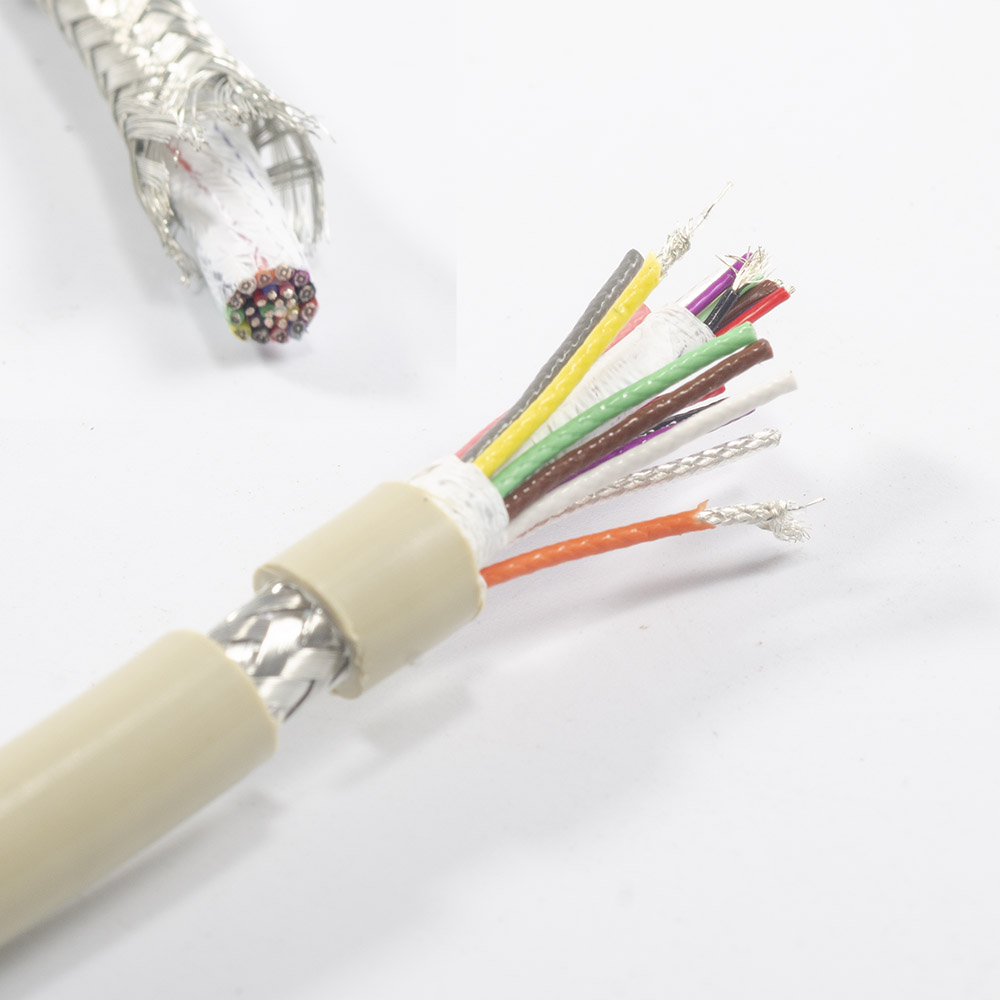
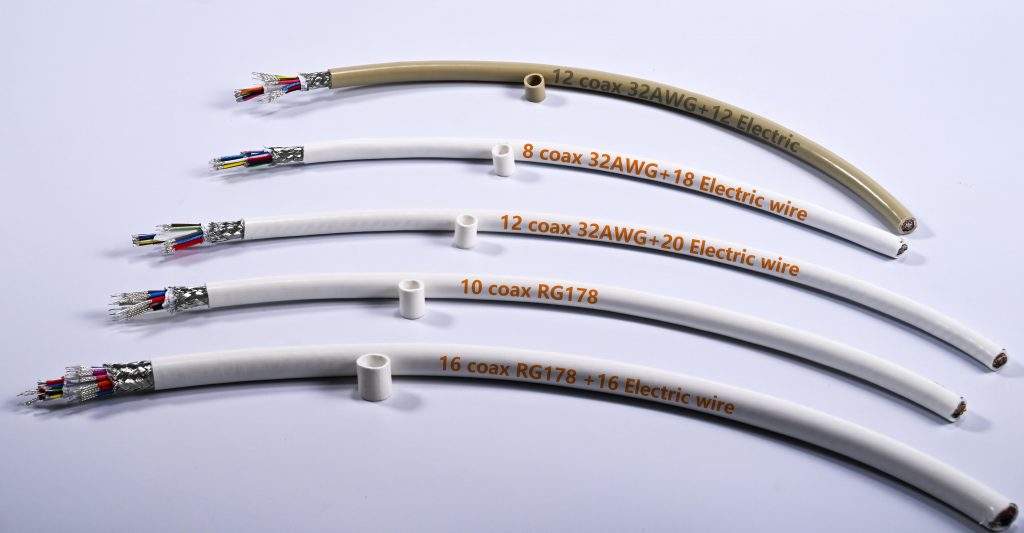
- Composite cable with multi coax cable and signal wires(whose numbers are usually equal to or more than that of the coaxial rf cables
As a reliable medical cable manufacturer, we provide alternative compatible multi-core RF coaxial cables for main MRI systems (compatible with GE, Siemens, Philips, Mindray) during system maintenance or device R&D, significantly decreasing the overall diameter to go through strict holes.
| Core / Wire Count | Coaxial Cable Specs | DC Signal Wires | Overall Diameter | Typical Application |
| 10 Wire MRI Cable | 10x 30AWG Coax (RG178 Standard) | None (Pure Coax) | ~ 6.2 mm | General RF Signal Transmission / MRI Repair |
| 24 Wire Composite | 12x 32AWG Coax (50 Ohm) | 12x 26AWG Stranded | ~ 7.5 mm | Phased-Array Coils / GE & Siemens Compatible |
| 28 Wire Composite | 8x 32AWG Coax (50 Ohm) | 20x 28AWG Stranded | ~ 6.8 mm | 8-Channel Surface Coils / Lower Diameter |
| 32 Wire (Type A) | 12x 32AWG Coax (50 Ohm) | 20x 28AWG Stranded | ~ 7.8 mm | 12-Channel High-Density Surface Coils |
| 32 Wire (Type B) | 16x 30AWG Coax (RG178 Standard) | 16x 26AWG Stranded | ~ 8.5 mm | MRI Power & Signal Integrated Control |
| 32 Wire (Type C) | 12x 32AWG Coax (50 Ohm) | 1x 21AWG + 19x 28AWG | ~ 8.0 mm | Mixed Voltage Systems / Custom R&D Projects |
| 48 Wire (Type A) | 16x 30AWG Coax (RG178 Standard) | 32x 26AWG Stranded | ~ 10.5 mm | High-Channel Density Phased-Array Systems |
| 48 Wire (Type B) | 24x 30AWG Coax (RG178 Standard) | 24x 26AWG Stranded | ~ 11.2 mm | 24-Channel Tim Panoramic Imaging Coils |
| 68 Wire High-Density | 9x 26AWG + 9x 32AWG Coax | 46x 28AWG Stranded | ~ 13.5 mm | Multi-Channel Matrix Coils / Siemens Tim Technology |
Coaxial RF Cable: Coaxial RF cable is a commonly used structural type. Due to the concentric position of the inner and outer conductors, electromagnetic energy is transmitted within the dielectric material between the inner and outer conductors. This type of cable has significant advantages such as low attenuation, high shielding performance, wide frequency band, and stable performance. It is typically used for transmitting RF energy ranging from 500 kHz to 18 GHz. There are two common types of RF coaxial cables: 50 ohm rf cable and rf 75 ohm coaxial cable. The 75Ω coaxial cable is commonly used in CATV networks, thus referred to as CATV cable, with a transmission bandwidth of up to 1 GHz.
Impedance Tolerance : Strict 50±3Ω (Industry standard is ±5Ω, our precision matches Leoni standard).
VSWR : ≤1.3 within the critical 12MHz ~ 300MHz medical imaging frequency band.
Proton Test Passed : Outer jacket material ensures Zero H+ Proton interference, causing absolutely no artifacts on the MRI image.
Non-Magnetic Guarantee (100%): Constructed entirely from Non-ferrous copper alloys (Tested and proven in high-Tesla MRI environments).
As mentioned above, in MRI systems, 50ohm coaxial cable (as inner wires in a multi coax cable) is widely used, in the form of RG 178 or custom rf cables with 32AWG conductor (Compared with RG 178,which is 30AWG,the 32AWG 50 ohm rf cable can decrease the overall diameter of the cable, and can go through some holes in a MRI machine) . During maintenance of an MRI system, if original RF coaxial cables cannot be obtained or the cost is too high, repairers sometimes use compatible multicore RF coaxial cables that are suitable for MRI, such as RG178 (conductor specification: 30 AWG), or custom-made non-standard coaxial cables with a characteristic impedance of 50Ω (for example, conductor specification: 32 AWG).
Key factors for MRI Cable
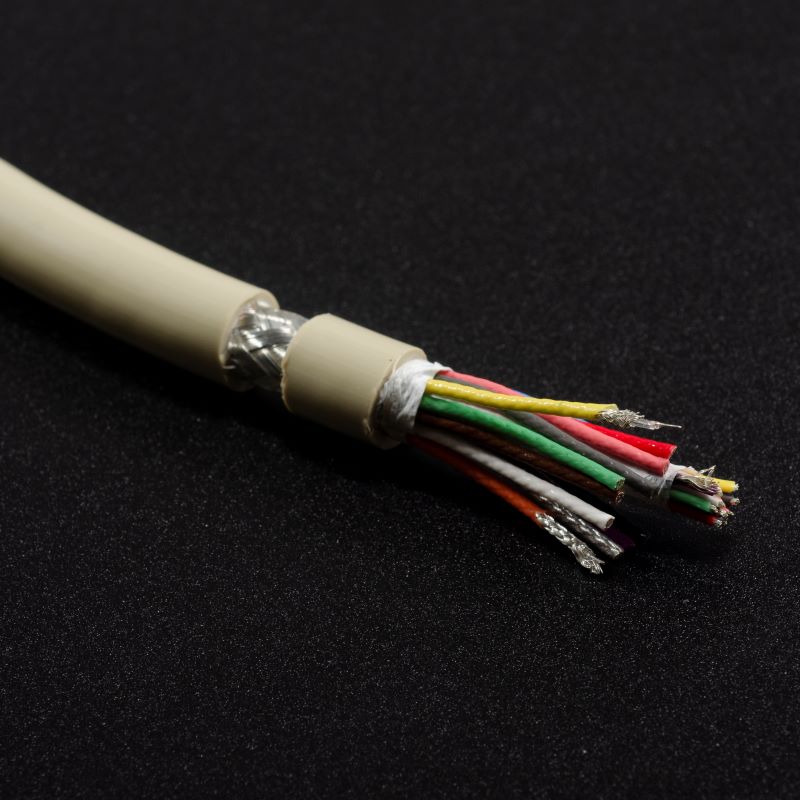
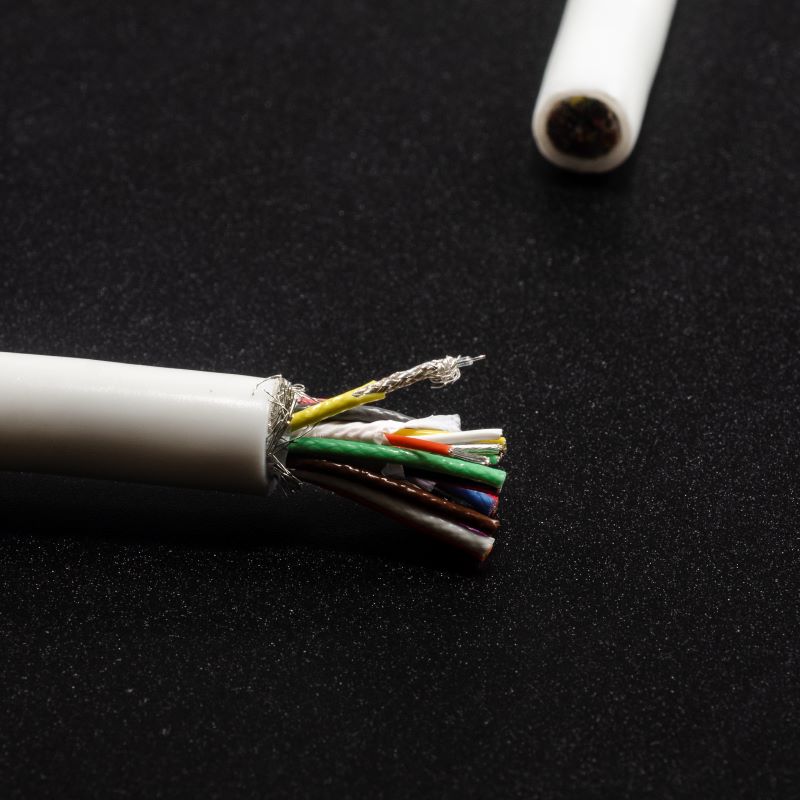
The imaging principle of MRI is based on the interaction between magnetic fields and radiofrequency pulses, which causes the hydrogen nuclei (H+) within the human body to undergo precession and generate radiofrequency signals. Therefore, if there are H+ ions present in the material of the RF coil, it can impact the imaging process of MRI. A MRi Compatible Multi Coax cable must meet the following requirements:
1 Electronic properties,take 50 ohm rf cable for example:
Characteristic impedance:50±3Ω (it is more strict than regular tolerance 50±5Ω, Leoni,s tolerance is 50±2Ω
- Delay:4.9ns/m
- VSWR:≤1.3(12~300MHz)
- Attenuation typ.(dB/100m):12MHz≤21.7,63MHz≤49.5,123MHz≤69.1,135MHz≤72.5,300MHz≤108.8 ,350MHz≤155.2,400MHz≤175.1,450MHz≤190.2,500MHz≤210.1
2 Non-magnetic Material shall be used.
3 Jacket material must be able to pass Proton Test(No H+Proton)
Our In-House Verification & Testing: “As a professional medical cable manufacturer, every batch of our MRI compatible multi coax cables undergoes rigorous laboratory validation, including attenuation testing up to 500MHz and strict magnetic susceptibility testing, ensuring seamless compatibility with mainstream GE, Siemens, and Philips MRI systems without generating image artifacts.”